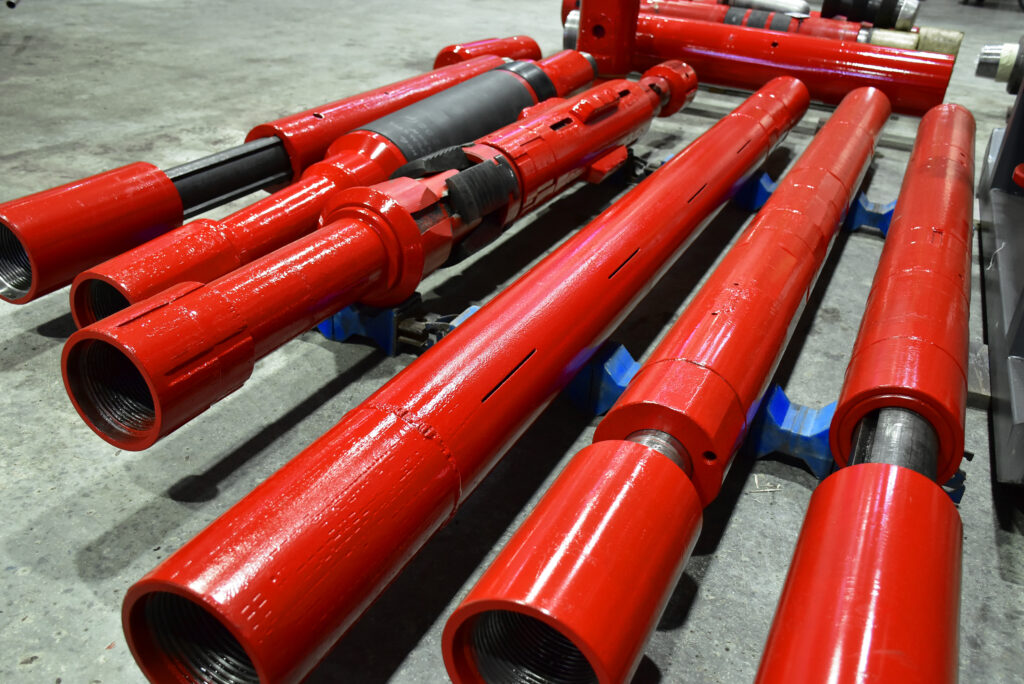
Open-hole formation testing during well drilling occurs when potential intervals are exposed, aiming to acquire reliable data while preserving the natural filtration properties of the rocks and ensuring hydraulic communication with the well.
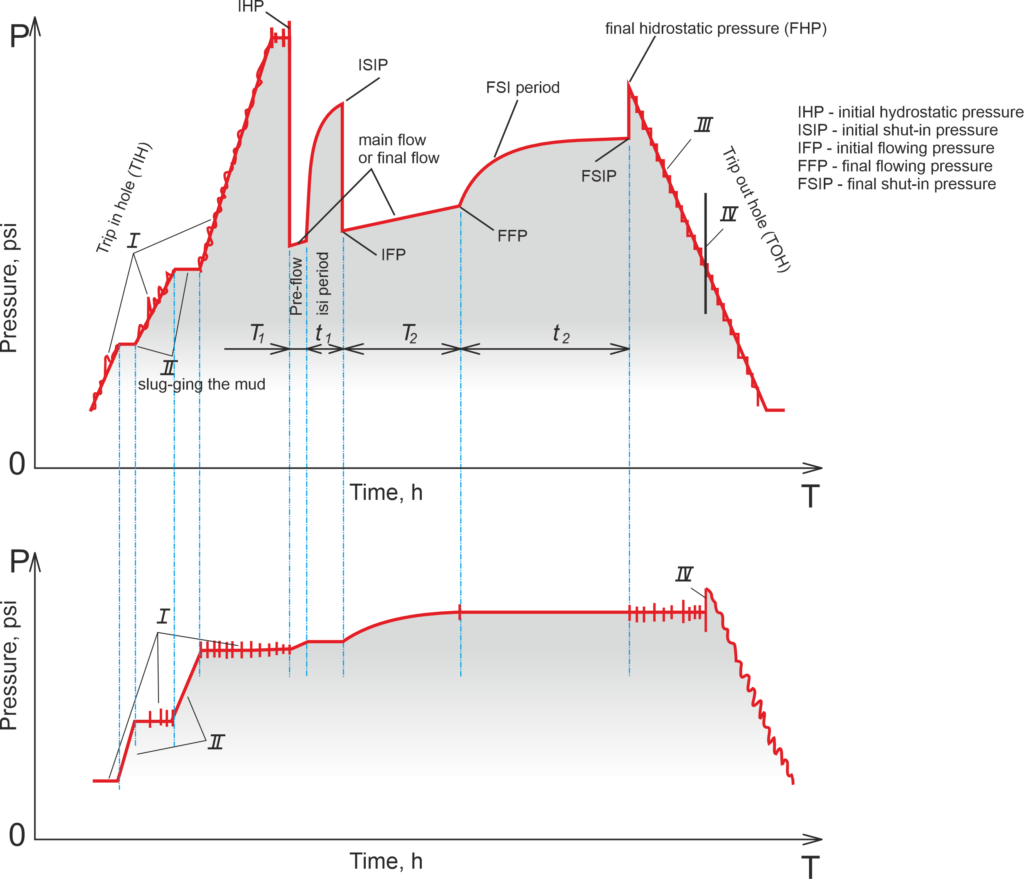
This testing employs multi-cycle testers lowered into the well on drill pipes. It involves sampling fluid from the formation and continuously recording pressure and temperature using electronic gauges in the sub-packer and over-packer zones. Post-test, hydrodynamic parameters are calculated using gauge data, and test quality is monitored.
Testing formations during drilling offers advantages such as:
– Enhanced objectivity in hydrodynamic data due to minimal contamination from drilling and cement mud in the bottom hole zone;
– Reduced testing duration compared to cased wellbore tests;
– Ability to determine the sufficiency of obtained information for characterizing the object’s industrial significance or the need for further testing.
“PILOT DT” LLC
provides the ability to perform well testing operations with reservoir testers on pipes, depending on the needs of the customers.
There are several types of equipment sets for testing reservoirs on pipes, which are completed in accordance with the well conditions and the need to perform certain technological programmes: a set of equipment for testing reservoirs on pipes with a focus on the bottom hole, a set of equipment for testing reservoirs on pipes without a focus on the bottom hole, a set of equipment for testing reservoirs on pipes for conditions with automatic pressure testing and automatic pressure testing.
– Testing in open and cased hole.
– Tests in conditions with ALRP and AHRP.
– Installation of systems with emphasis on the bottom hole and using anchor devices.
*AHRP – abnormal high reservoir pressure;
**ALRP – abnormal low reservoir pressure.
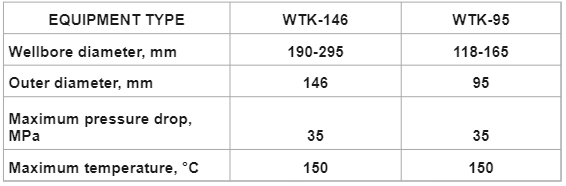
Our downhole tester equipment packages WTK-146 and WTK-95, with outer node diameters of 146mm and 95mm, respectively, allow for two-cycle reservoir testing operations: recording two inflow curves and two pressure recovery curves, which significantly increases the information content of the study. This allows for the determination of not only the initial reservoir pressure, permeability, and reservoir permeability, but also the degree of reservoir contamination and the dynamics of reservoir pressure decline and changes in reservoir permeability in the near-wellbore zone.For well testing in AHRP/ALRP conditions, we use new technology and AHRP/ALRP testers. The new technology is based on the use of a fundamentally new design downhole tester that is not limited by the depth of descent and the density of the drilling fluid in the well and replaces the following nodes in the standard configuration of the testing tool: downhole tester, shut-off valve, circulation valve. This configuration allows for the use of a differential adapter as a shut-off device for partial filling of the drill string with fluid, in order to create the necessary drawdown on the reservoir.
*WTK – Well Testing tool Kit;
**AHRP – abnormal high reservoir pressure;
***ALRP – abnormal low reservoir pressure.